Retro style has been making a comeback in interiors, fashion and design for years. It is an aesthetic that recalls the best elements of past decades and reinterprets them. As a result, interiors inspired by the past gain a unique character while remaining functional and suited to modern needs. Many people wonder, however, which decades retro style covers and what retro style actually is when it comes to interior design.
Retro style is an aesthetic inspired by the design of the past, referencing the distinctive forms, colours and materials that were popular in previous decades. It does not, however, mean faithfully recreating old interiors. Rather, retro style is about creatively combining elements of historical design with modern solutions, so the space stays functional and comfortable.
The popularity of retro style stems from its unique character. Interiors inspired by past decades are full of personality and draw attention with their details. Unlike very minimalist schemes, retro style lets you introduce more colour, interesting shapes and decorative elements.
What is more, retro-inspired furniture is often distinguished by high-quality craftsmanship and well-thought-out construction. Natural materials such as wood and timeless proportions mean that such furniture stays in fashion for many years.
Retro style – which decades does it cover and where does it draw inspiration from?
One of the most frequently asked questions is exactly that: retro style – which decades? Most often it refers to design from the 1950s to the 1980s. It was during this period that many furniture and accessory designs were created that are still regarded as design classics today.
The post-war years were a time of intense development in design. Designers began experimenting with new forms, materials and colours. The result was furniture that combined aesthetics with functionality – visually light yet highly practical.
The key inspirations of retro style come from a few distinctive decades:
- the 1950s – light furniture forms, slim legs and pastel colours dominate
- the 1960s – geometric patterns, natural wood and bolder colours appear
- the 1970s – warm colours, soft lines and more decorative accessories come into fashion
- the 1980s – bolder colour contrasts and more expressive design emerge
In interior design, however, inspirations from the 1950s and 1960s are used most often, as they stand out for their elegance, simplicity and functionality.


What are the defining features of retro interior style?
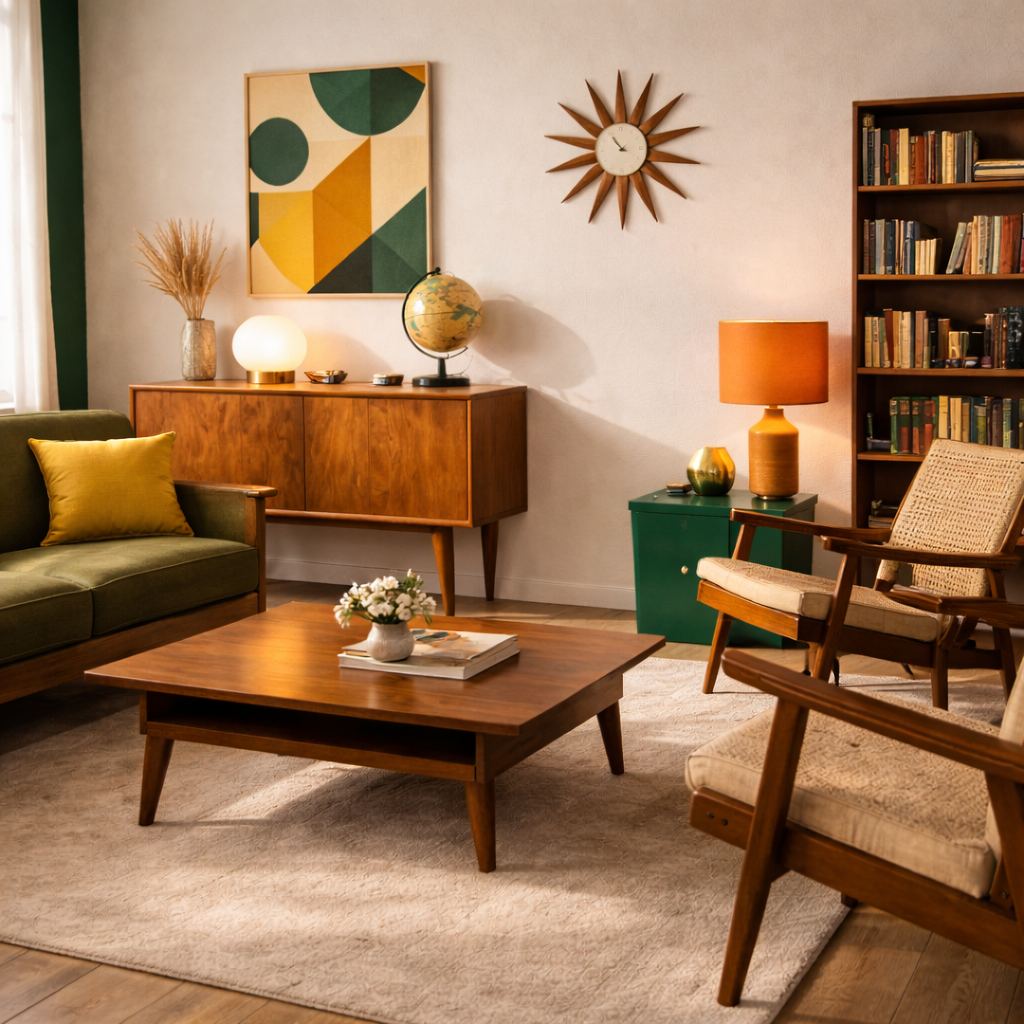
Retro style is easy to recognise thanks to a few distinctive elements. Above all, furniture form matters – light bodies, slim legs and natural materials. Such furniture looks elegant without overwhelming the space.
Retro interiors are usually cosy and full of details. Colour plays a very important role here. Alongside natural wood tones, you will often see stronger colours such as mustard, olive green, turquoise or orange.
The key features of retro style include:
- natural wood with a pronounced grain
- slim, tapered furniture legs
- geometric forms and simple shapes
- warm, nature-inspired colours
- a combination of functionality and decorative character
Accessories are also important. Organically shaped lamps, prints inspired by vintage design, ceramics and textiles with geometric patterns help create a coherent scheme.
How to bring retro style into a modern interior
Retro style does not have to mean a complete overhaul of your home. Quite the opposite – it looks best when introduced gradually and deliberately. A modern space readily welcomes elements inspired by the past, as long as they are well balanced and set against a simple backdrop. This way, the interior gains character without losing its lightness or functionality.
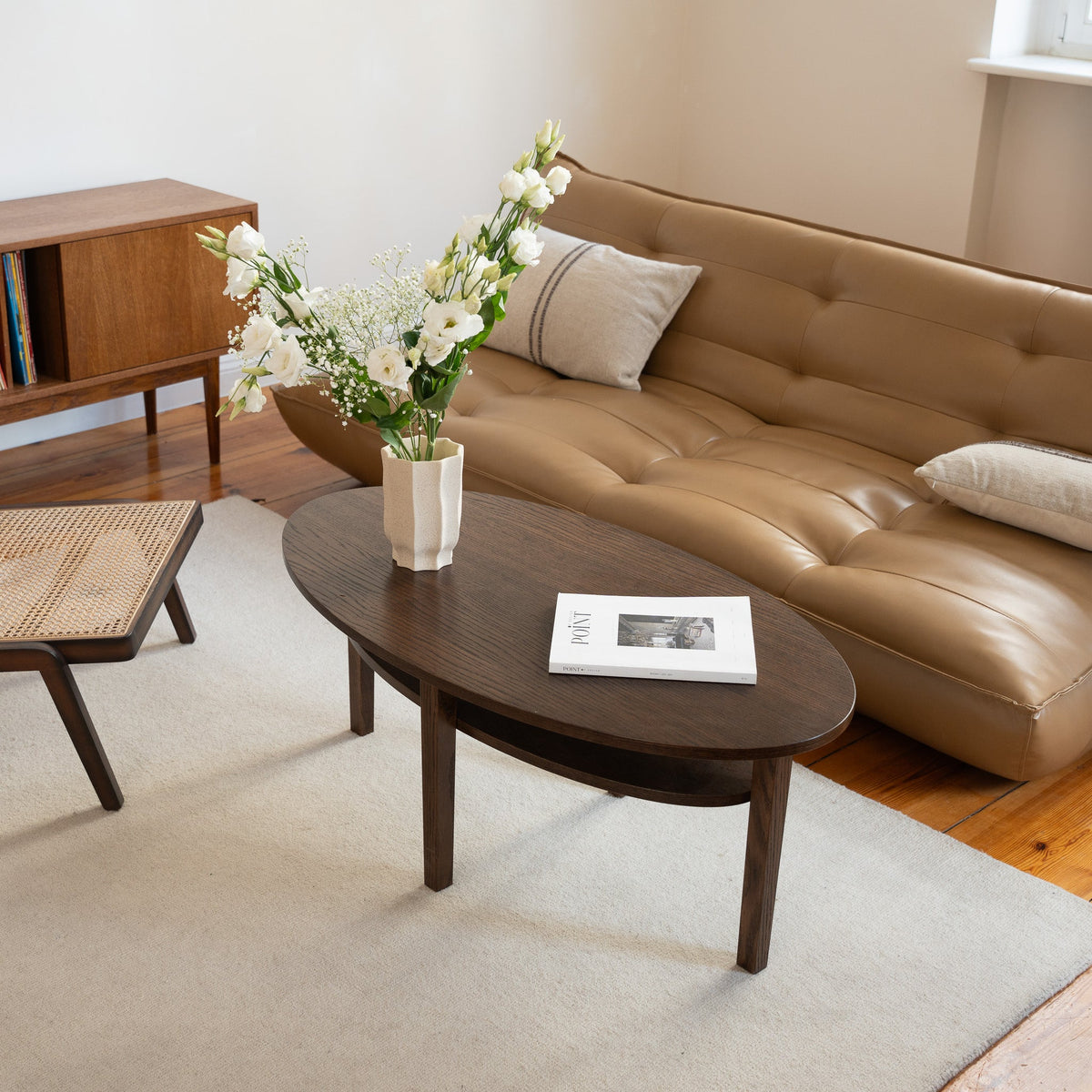
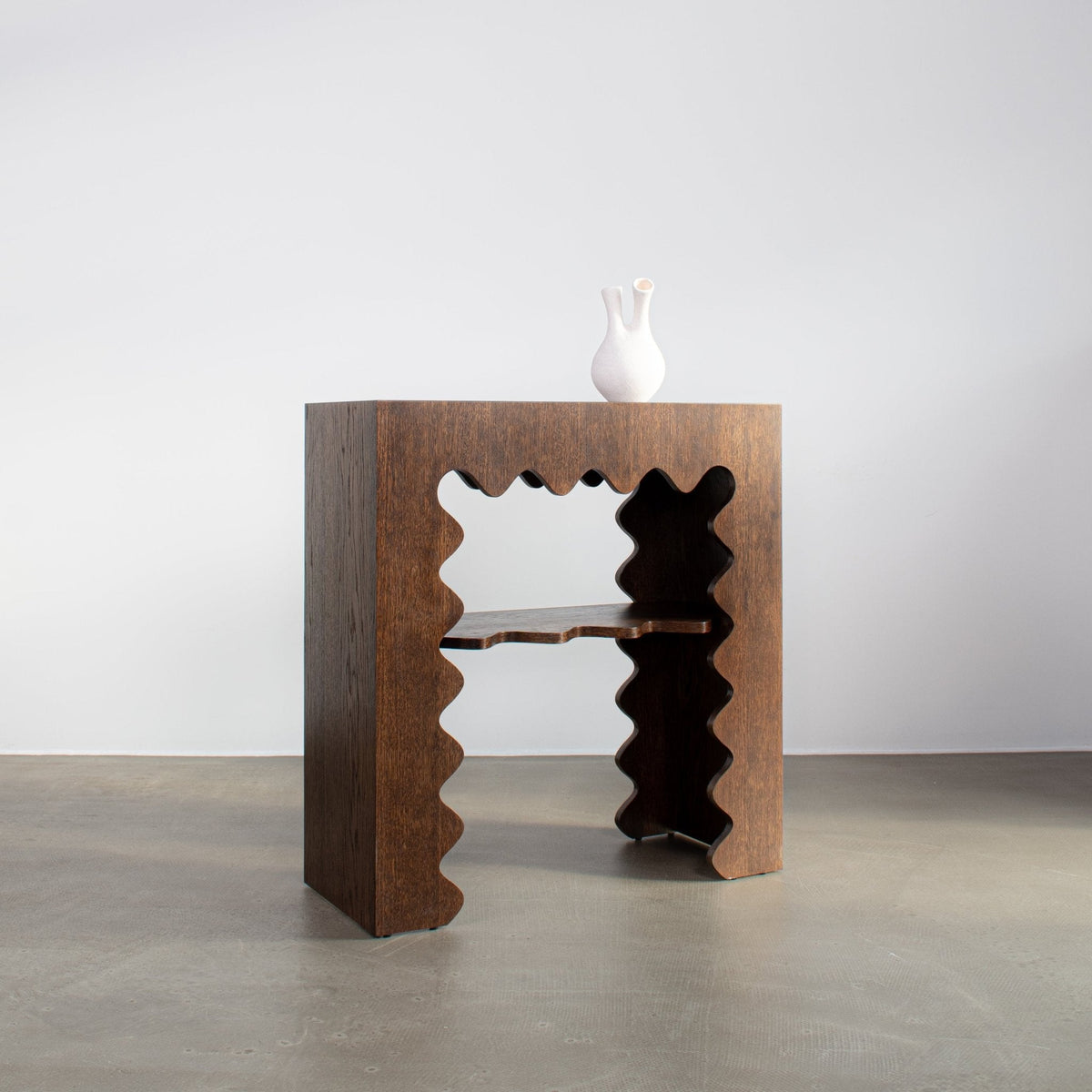
A good starting point is to choose one statement piece that will become the focal point of the room. This could be a retro sideboard on slim legs, a natural wood coffee table or a bedside table inspired by the 1950s and 1960s. Such a piece instantly draws attention and gives the space a more personal, refined feel. Importantly, a single well-chosen piece is often enough for the whole interior to start telling a completely different story.
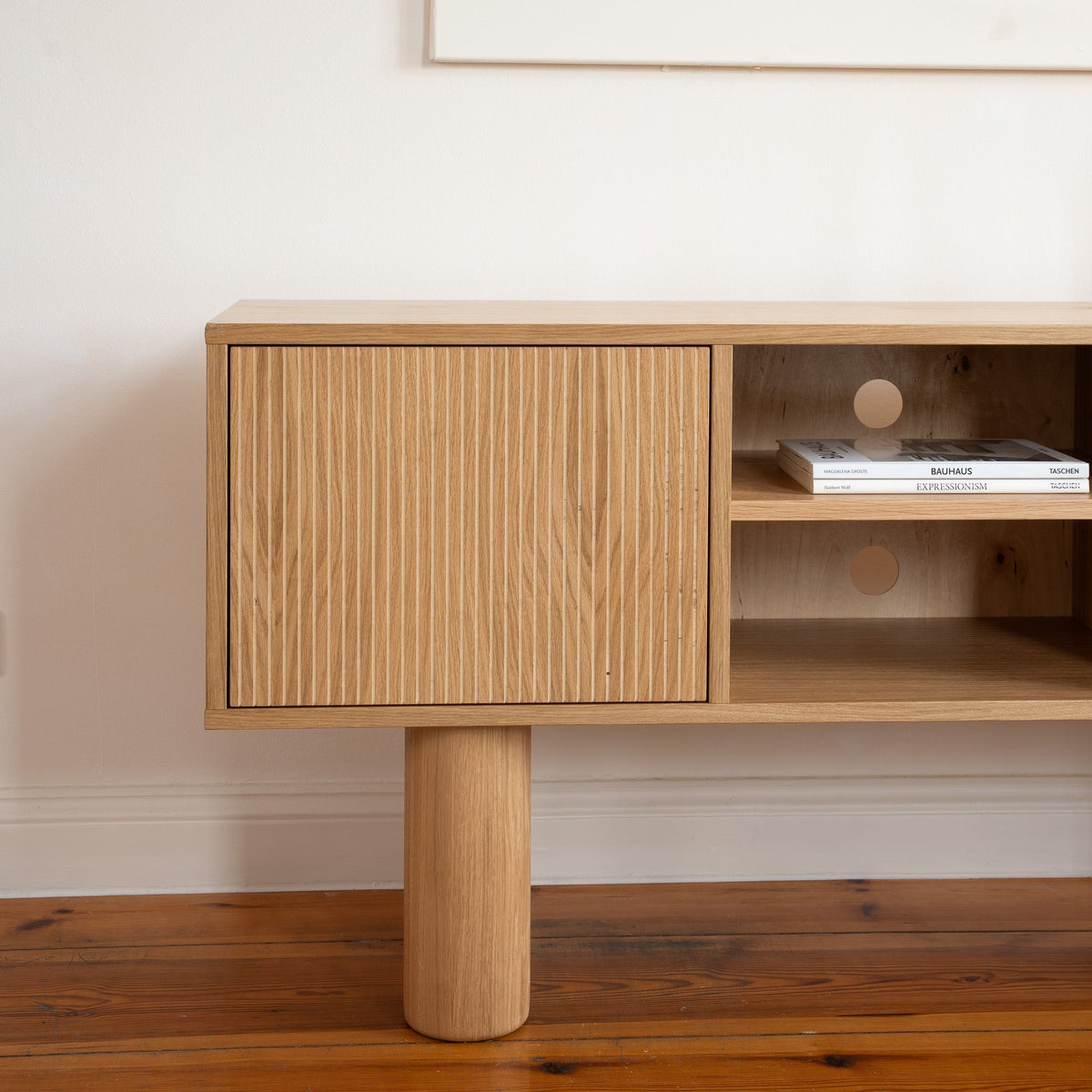
Retro style works best alongside simple, modern forms. Pairing a minimalist sofa with a wooden retro sideboard or contemporary lighting with a classic side table creates an interesting contrast. It is these combinations that keep a scheme from looking like a reconstruction of a bygone era and make it a modern interior with soul. Retro brings warmth to the space, while the modern elements keep the composition fresh and orderly.
Colours and accessories also play a very important role. If you do not want to invest in larger furniture straight away, you can start with retro-inspired accents. Cushions with geometric patterns, a lamp with an opal glass shade, prints referencing 1960s aesthetics or ceramics in warm tones can effectively create the right mood. Details like these warm up the space and add definition without the risk of overdoing it.
When bringing retro style into a modern interior, keep a few rules in mind:
- choose furniture made of natural wood with a light construction
- go for slim legs and simple shapes inspired by the 1950s and 1960s
- break up a neutral base with warm colours and striking details
- combine individual retro pieces with modern furnishings
- exercise restraint so the interior stays coherent and elegant
The best results come from a balanced approach. Instead of filling the whole home with furniture styled on past decades, it is better to choose a few quality accents. This way, the interior keeps its contemporary character while gaining depth, cosiness and timeless elegance. Modern retro style is therefore not a nostalgic return to the past, but a deliberate way of creating a space full of personality.
Why is retro style still so popular?
The return to the aesthetics of past decades is no accident. Retro style responds to the need to create interiors with character and history. In an age of fast-changing trends, more and more people are looking for design that will stay relevant for many years.
Furniture inspired by the 1950s and 1960s stands out for its exceptional craftsmanship and well-considered form. In many cases it was designed with durability and functionality in mind, which is why it still looks fresh and elegant today.
In addition, retro style lets you create more personal interiors. By combining classic forms with modern accessories, you can create a space that reflects the individual taste of the people who live there.